The 5 Biggest Challenges in Pharmaceutical Sourcing
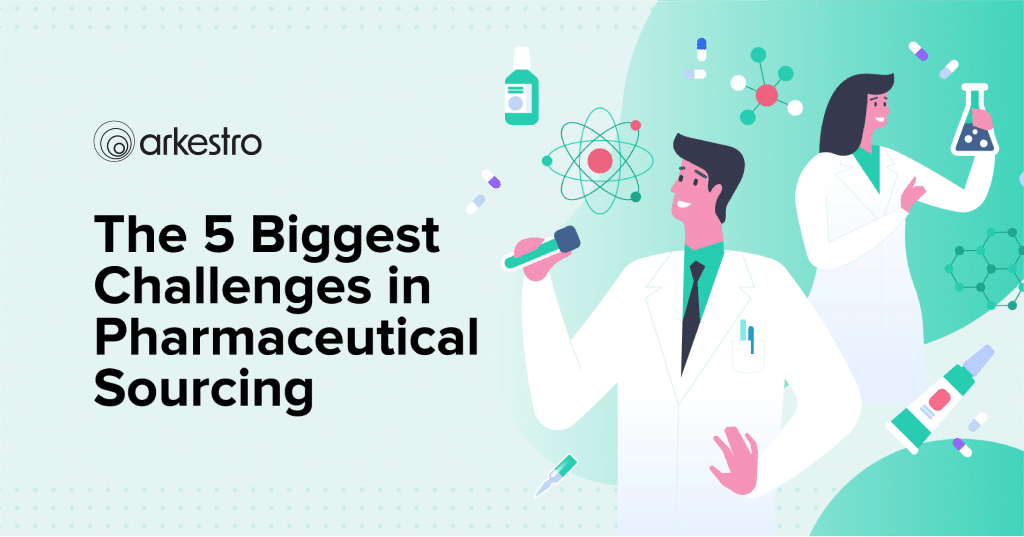
Sourcing professionals of all categories face a consistently challenging and ever-changing work environment, but those in the pharmaceutical industry deal with particularly demanding circumstances. The World Health Organization (WHO) summed up the complexity in a 1999 guide that remains accurate today:
“There are many steps in the procurement process. No matter what model is used to manage the procurement and distribution system, efficient procedures should be in place: to select the most cost-effective essential drugs to treat commonly encountered diseases; to quantify the needs; to pre-select potential suppliers; to manage procurement and delivery; to ensure good product quality; and to monitor the performance of suppliers and the procurement system. Failure in any of these areas leads to lack of access to appropriate drugs and to waste.”
You may have noticed that the WHO’s take on pharmaceutical sourcing challenges predominantly focuses on access to medication to those who need it. However, strategic sourcing teams for the companies involved are also working within the constraints of profitability and cost savings.—their employer is in business to make money. That requirement looms throughout the procurement process.
There are a lot of balls in the air, each of which can have serious repercussions. Here are five of the biggest challenges that keep pharmaceutical sourcing professionals up at night.
Compliance Challenges in Globalization
Compliance with health regulations is a critical factor in any pharmaceutical supply chain. The Food and Drug Administration has strict rules about medicinal ingredients and products, including manufacturing standards that must be adhered to. With globalization, tracking the compliance of suppliers based in other countries is a key part of the procurement process.
Managing Global Supplier Relationships
The relationship between buyers and suppliers remains at the forefront of the process. Ideally, the two work together as partners, helping to achieve the goal of strategic sourcing. However, in the modern environment where buyers and suppliers can be located thousands of miles apart and on different continents, managing this relationship can be especially challenging. This distance inhibits the face to face interactions, forcing relationships to be fostered virtually. Therefore, it’s critical to facilitate easy communication between the partners and just as important to have an accessible record of those communications.
Supply Chain Visibility
We’ve already touched on the importance of compliance. Another critical issue is supply chain visibility—and it takes on even greater significance in the international pharmaceutical industry.
Supply chain visibility provides regulatory and consumer assurance in the face of increasing issues like counterfeiting. Many consumers and advocacy groups are sensitive to products manufactured in certain countries, or raw materials that may be harvested using forced labor. Without supply chain visibility—all the way down the supply chain—a pharmaceutical company cannot prove that its products are free of any of these issues.
Under the Drug Supply Chain Security Act, any company selling pharmaceuticals in the U.S. market will have to be fully compliant with product tracing requirements (which were phased in beginning in 2015) by 2023.
Transportation and Storage Requirements
The strict regulations covering the transportation and storage of drugs and ingredients used in manufacturing provide unusual hurdles for the pharmaceutical industry. It is especially important with biologic drugs that require shipping and storage at specific, cold temperatures. Any pharmaceuticals are susceptible to contamination, with potentially dire consequences.
The procurement team or strategic sourcing professionals in any pharmaceutical company will need to be able to confirm that suppliers meet the storage and transportation requirements for any product or ingredient. In addition, they will need to be able to verify adherence on demand.
Geographic Market Shifts
One of the biggest challenges facing pharmaceutical procurement teams is sourcing materials in a global market that constantly shifts based on geographic factors.
There are changing geopolitical situations, such as the trade war between the U.S. and China. Shipments from a country that was the preferred source for an ingredient may be subject to tariffs that dramatically raise costs beyond any planned schedules. The economy of a nation can impact currency exchange rates, making its products suddenly too expensive—or, exchange rates may make a previously prohibitively expensive country attractive to do business with.
Climate change is increasingly an issue. A region that was the primary source of a raw material used in drug manufacture may suffer an extreme weather event that temporarily reduces supply and raises prices. Because of climate change, that region may be moving toward being unsuitable, requiring pharmaceutical companies to seek new sources.
Globalization means there are a vast number of variables in play for pharmaceutical companies, putting intense pressure on a procurement department that needs to track, manage, and incorporate them all as part of its sourcing process.
“If these challenges sound daunting, they are. But they are not impossible to manage.”
If these challenges sound daunting, they are. But they are not impossible to manage. The traditional approach has been to throw more resources at procurement. That can work, but it’s imperfect and costly—and a tough sell during times when companies are under pressure to cut costs.
A modern and more effective approach to pharmaceutical sourcing is Arkestro.
Arkestro is not just another computer application that helps with one aspect of the process. It is a comprehensive strategic sourcing software that’s designed by procurement professionals for procurement professionals. The platform manages all aspects of the sourcing process from real-time conversations with stakeholders and suppliers to supplier relationship management. This drives increased collaboration and transparency and supports traceability. It leverages advanced, cloud-based AI to automate mundane labor-intensive processes, making them faster, eliminating human error, and reducing stress. It’s ideal for tracking and weighing a wide range of variables, so decisions are made faster and based on optimal strategic factors and values—not just price.
The Arkestro platform runs global negotiations, regardless of time zone, and helps strategic sourcing teams with faster negotiation cycles and clear next steps. Schedule a demo to learn how your Pharma organization can benefit from Arkestro’s Predictive Procurement Orchestration platform.